RAMI AV-590 & AV-590(-28) COM Electronic Switch
The AV-590 is an electronic switch allowing two COM radios to share the same COM antenna.
In receive mode, it acts as a signal splitter allowing both COM radios reception across the entire COM band (118-137 MHz).
In transmit mode, which ever COM radio (COM 1 or 2) is selected through the audio panel, a control signal is sent to the AV-590, switching the selected COM radio to the COM antenna and isolating the remaining COM radio from the COM antenna.
Once no longer transmitting, the control signal is removed and the AV-590 electronic switch reverts back to the receive mode as described above.


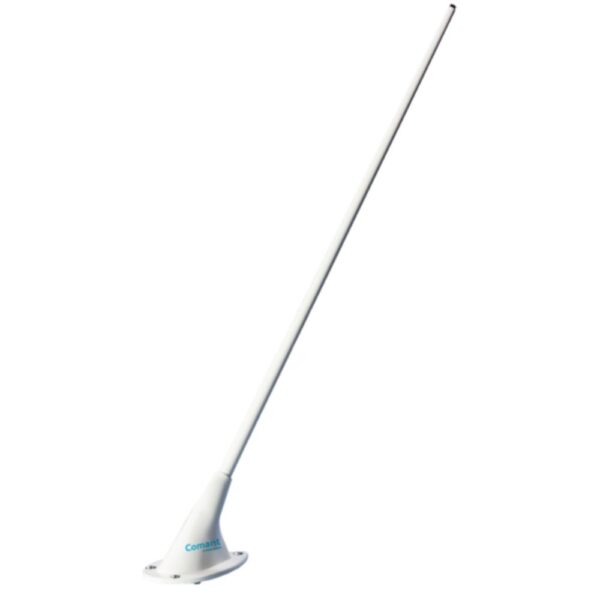


CI 292-1 VHF Whip Antenna | 118-137 MHz, BNC
The CI 292-1 is specifically designed to be mount on top of the aircraft while providing excellent omni-directional coverage for all VHF communication frequencies. The CI 292-1 features a straight, tapered stainless steel radiator. This antenna has been updated to meet RTCA DO-160D environmental requirements while offering frequencies from 118 MHz to 137 MHz associated with DO 186 MOPS.
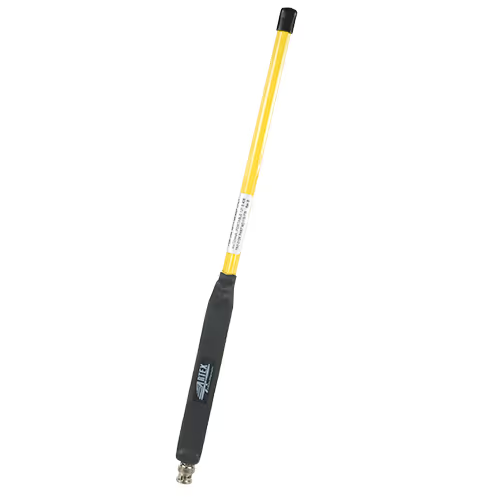

RAMI AV-532L VOR/LOC/GS Receive Only Antenna
The AV-532L is a VOR/LOC/GS receive only antenna. It consists of taper ground high-strength 17-7PH stainless steel elements to reliably withstand vibration and wind loads. The insulators are weather-sealed compression-molded bakelite with the mounting holes provided. The unit may be mounted with the V pointed either forward or aft. The antenna is designed to operate at speeds up to 350 mph and altitudes up to 50,000 ft. It has a drag force of 3.42 lb @ 250 mph. A 30 foot transmission line with integral balun is also supplied.

RAMI AV-300 ELT Communication
The AV-300 ELT antenna is intended for use with a 406 MHz ELT (Emergency Locator Transmitter) for General Aviation. It is a passive three frequency fiberglass rod whip antenna, designed for low speed aircraft (up to 350 knots). It has met DO-160G, Section 8, Category U requirements for robust vibration and is qualified for installation on helicopters with unknown rotor frequencies.