


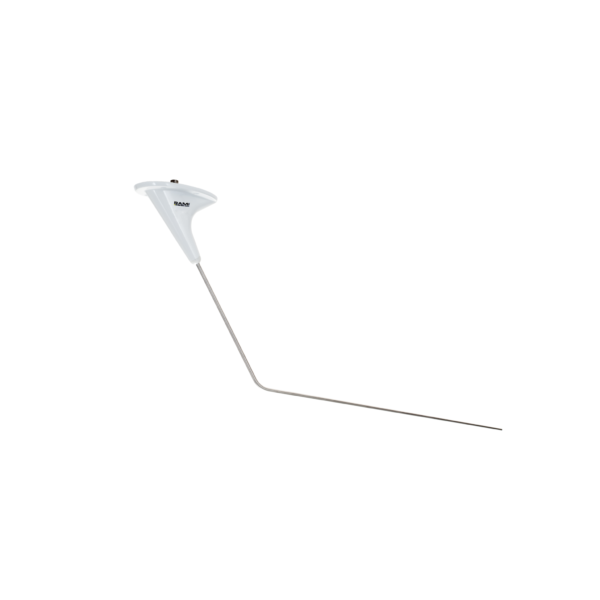
RAMI AV-17 Airborne Communications | VHF
The AV-17 is a general aviation antenna designed specifically for mounting to the underside of an aircraft, providing an excellent radiation pattern for air-to-ground communications. It has a 4-bolt mounting base and is low in profile. The antenna is designed to operate at speeds up to 350 mph and altitudes up to 50,000 ft. It has a drag force of 0.66 lb @ 250 mph. This antenna is a direct replacement for the CI 122.
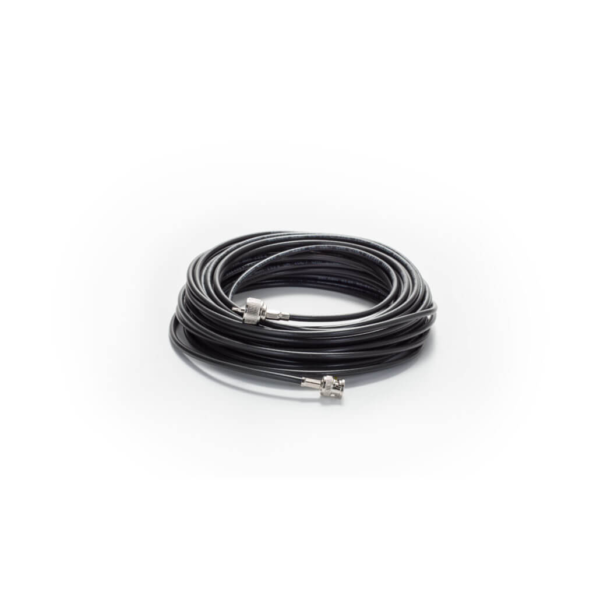
RAMI AV-6 Cable Assembly

RAMI AV-1FG Base Station | VHF
The AV-1FG is a base station antenna for communications mounted on top of a quick erect fiberglass telescoping mast which can be extended anywhere from approximately 5’ 6” to 27’ tall in 5’ increments. The mast is supplied with guy rings, guy ropes and anchor stakes for security when erected. This kit can be used with Becker Avionics GK615 and GK616 VHF radios.
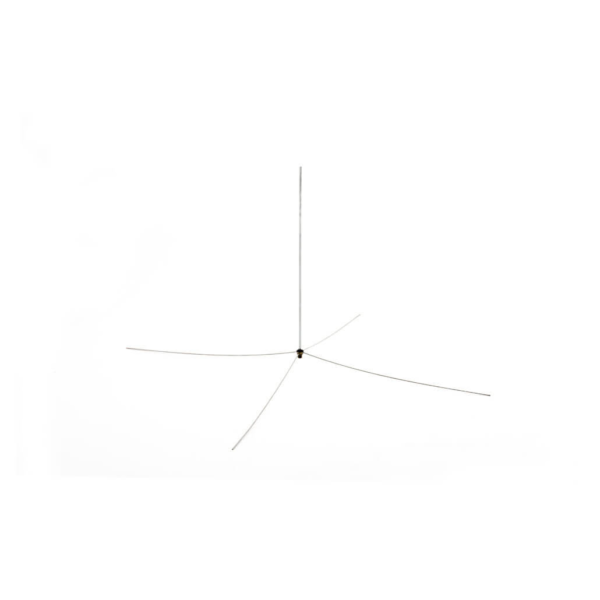
RAMI AV-5 Base Station | VHF
The AV-5 is an economical Ground Plane base station antenna for general aviation. It is ideally suited for use with Unicom transceivers and is field tunable to optimize VSWR at desired frequency. Durably constructed of high quality materials for a long operational life, the antenna is designed to withstand wind speeds up to 100 mph.

RAMI AV-931 Diplexer

RAMI AV-930 Diplexer

RAMI AV-590 & AV-590(-28) COM Electronic Switch
The AV-590 is an electronic switch allowing two COM radios to share the same COM antenna.
In receive mode, it acts as a signal splitter allowing both COM radios reception across the entire COM band (118-137 MHz).
In transmit mode, which ever COM radio (COM 1 or 2) is selected through the audio panel, a control signal is sent to the AV-590, switching the selected COM radio to the COM antenna and isolating the remaining COM radio from the COM antenna.
Once no longer transmitting, the control signal is removed and the AV-590 electronic switch reverts back to the receive mode as described above.

RAMI AV-586 Antenna Accessories | Coupler
The AV-586 antenna coupler is a signal splitter providing two outputs from a single antenna. The necessity of bringing this product forward comes from advancing technology in avionics. Newer designed navigational radios have only one antenna input to receive all three (VOR/LOC/GS) signals whereas older legacy radios had a separate antenna input for the VOR/LOC signal and another antenna input for the GS signal.
In an aircraft instrument panel with two newer navigational radios the AV-586 is the article that will provide the necessary signals to both radios utilizing a single antenna.

RAMI AV-585 Antenna Accessories | Diplexer, Splitter

RAMI AV-575 Marker Beacon Antenna Splitter

RAMI AV-571 Antenna Accessories | Diplexer, Splitter


